Showing posts with label rajasthani cuisine. Show all posts

JODHPURI MIRCHI VADA


Nai sarak in Jodhpur use to be the hub for shopping and eating. Good shopping followed by a couple of mirchi vadas at Janata sweets is one of the many memories from Jodhpur.
Mirchi vada is the most popular rajasthani street snack. Its is similar to batada vada or alu bonda from south.


Mirchi vada big, fat green chilli stuffed and covered with spicy, tangy potato mixture; then coated with gram flour batter and finally deep fried.

One mirchi vada is quite filling. It can be sliced into three to four pieces and served with ketchup as an appetizer.

Any large and non-spicy variety of chilli can be used such as bhavnagari chillies. I have used jalapeno chillies here as these were the only variety available with the supermarket. I have deseeded the chillies to reduce its pungency. Depending on the chilli you can adjust the red chilli powder to be added. The given proportions are totally at level with the rajasthani palate.

The number of potatoes required is equal to the number of green chillies to be used for this recipe. This is my rough proportion of green chillies and potatoes. I find it easier this way than weight measurements.

Recipe for Jodhpuri mirchi vada


Ingredients for Jodhpuri mirchi vada


  • 6 green chillies (fat and non-spicy variety)
  • 6 medium-sized potatoes
  • ½ tsp roasted cumin powder
  • ½ tsp coriander powder
  • 1 tsp chilli powder
  • 1 tbsp dry mango powder/ dried pomegranate seeds
  • ¼ +¼ tsp turmeric powder
  • 2 cups gram flour
  • 10 cashew nuts (chopped)
  • ¼ cup raisins (chopped)
  • ¼ cup coriander leaves (finely chopped)
  • Salt to taste
  • Oil for frying

How to make


Boil the potatoes. Remove its skin and lightly mash it. Avoid mashing it completely. Finely mashed potatoes, it does not hold on to the chillies and slips away.


Add salt, turmeric, cumin powder, coriander powder, dry mango powder, red chilli powder, cashews, raisins and coriander leaves.


Combine all the ingredients and keep aside.


Make an incision in chillies and deseed them.


Stuff the chillies with the potato mixture and cover the chillies with the same. The thickness of the potato coating should be 3/4th to 1cm.


Make a smooth batter of gram flour with a ¼ teaspoon of turmeric powder, salt and a cup of water.

The batter should be of coating consistency.

Now coat the chillies with the batter and deep fry for one minute on each side or until the coating is cooked.

Serve with sweet and sour tamarind chutney.

HALDI PANEER


At times you want to do a particular thing but for a hundred reasons or for unknown reasons you don’t do it. Well haldi ki sabzi is that dish which I wanted to try for a long time but couldn’t bring myself to prepare it.

During my three years stay in Jodhpur I had a wonderful time exploring Rajasthani culture, festivals and food. Due to my close interaction with some local friends I was able to know more about rajasthani food culture. But amazingly I missed on this one dish, haldi ki sabzi, until recently I prepared it. I discovered that haldi ki sabzi is my favourite rajasthani sabzi till date. I liked it so much that I prepared it a couple of times more for my guests.


Preparation of this dish takes a bit of time as the fresh grated haldi needs to be sauted on low heat for 30 to 45 minutes depending on the quantity. Believe me , every bit of this labour is worth it. In Rajasthan this sabzi is prepared in bulk for one time, stored in refrigerator and used as required.

Quantity of ghee (clarified butter) required for this dish is equal to the quantity of haldi (turmeric).

Reducing the amount of ghee may cause turmeric to stick to bottom. I realised that enough quantity of ghee makes the process a little easy. Nothing to worry about that extra ghee. It gets separated at the end of preparation and it can be removed easily with help of a ladle. The turmeric flavoured ghee can be used for tempering a dal or smear it on chapatti, roti or phulka.

Generally in Rajasthan Haldi ki sabzi is prepared with green peas. The yellow and green sabzi looks beautiful. Here is a little twist to the traditional Haldi ki sabzi.  Paneer (cottage cheese) compliments haldi very well.


Recipe for Haldi Paneer


Ingredients for Haldi Paneer


  • 250gms fresh haldi or turmeric (grated)
  • 250gms ghee (clarified butter)
  • 150gms paneer (cut into cubes)
  • ½ cup onion (finely chopped)
  • ½ cup curd (beaten)
  • 8 to 10 cloves garlic (crushed)
  • 2 tsp red chilli powder
  • 1 tsp coriander powder
  • 1 tsp cumin powder
  • Salt to taste

How to make


Add ghee in a medium hot pan. Add the crushed galic. Sauté for a minute.


Tip in the grated haldi. Reduce heat to low.


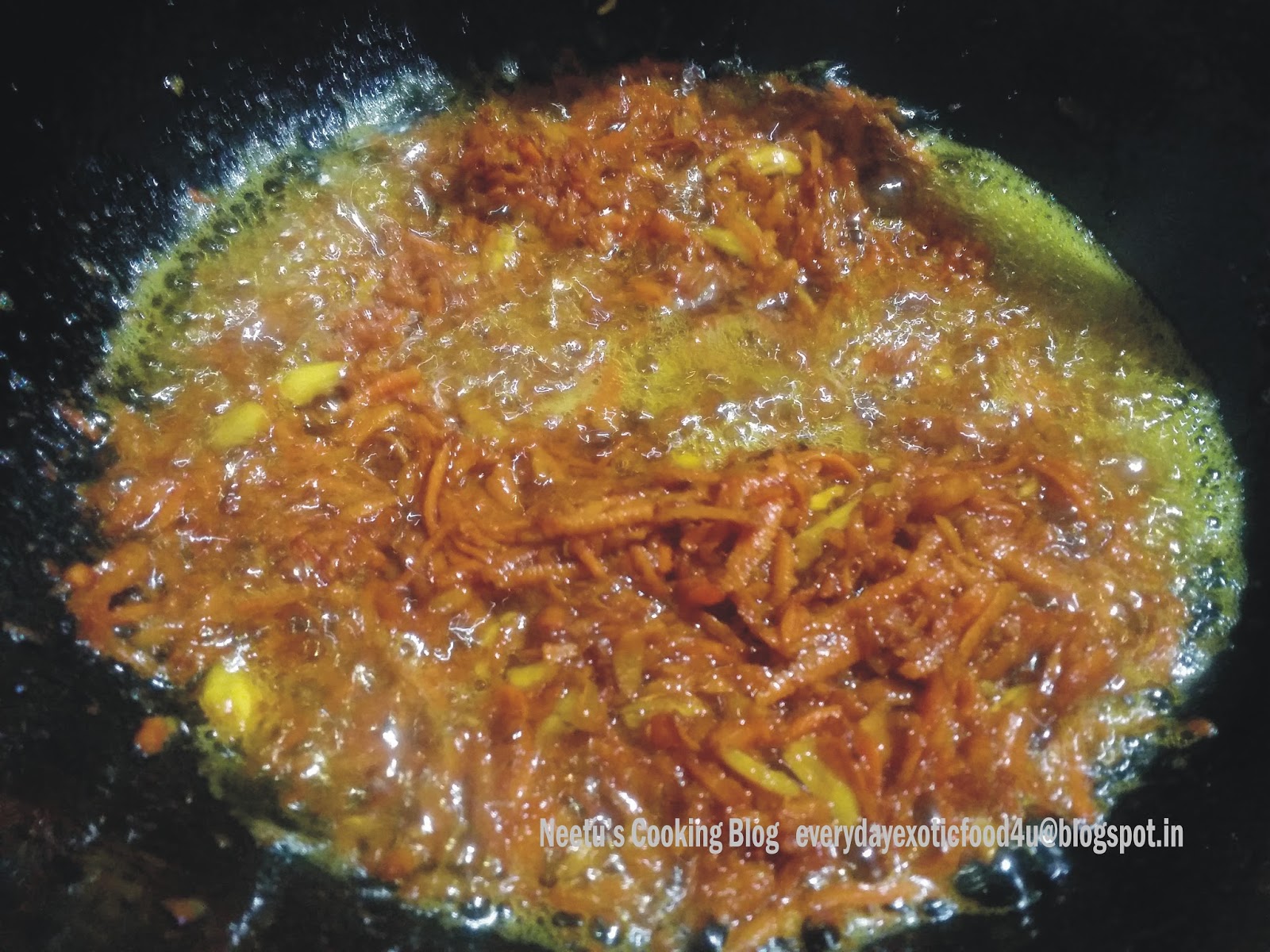
Sauté on low heat until turmeric changes colour from yellow to light brown and the ghee separates from sides. Remember to sauté continuously as it tends to stick to the bottom.


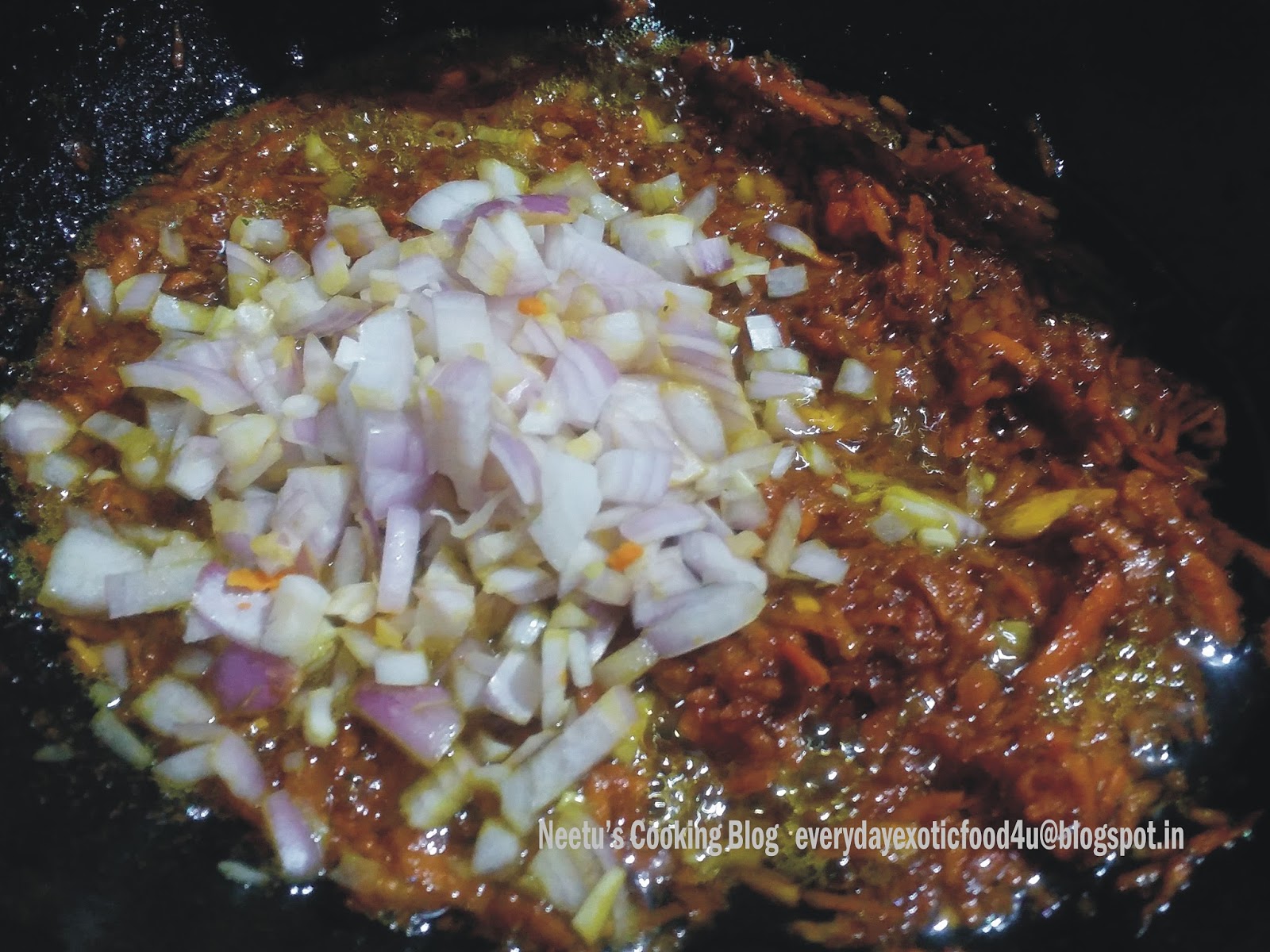
Add onions. Saute for 2 minutes.


Add red chilli powder, coriander powder, cumin powder and salt. Mix well.


Now add beaten curd and mix well.


Sauté continuously for 5 minutes until the ghee starts floating at the surface.


Tip in the paneer cubes and cook for another 5 minutes.

Delicious Haldi paneer is ready to eat. This sabzi can be prepared in bulk and stored in refrigerator for entire winter (minus the paneer). Heat the required quantity from refrigerator and add paneer or peas or any other vegetable of your choice. 

HALDI KA ACHAAR/ FRESH TURMERIC PICKLE (NO OIL)


Who doesn’t like food that is healthy and tasty. This is a no oil pickle recipe full of taste and health benefits. Fresh turmeric (kacchi haldi) is the best way to enjoy the benefits of turmeric.

Fresh turmeric pickle is generally made during winter as it is easily available in markets during that time. This recipe will surely burst the myth saying that oil is a must for pickles or pickles cannot be stored for a longer period without oil. The turmeric pickle I had made in last winters is still in good condition without any loss of flavour.


This recipe requires only few ingredients. The tartness of the lemon juice cuts the bitterness of turmeric. The bird eye chilli adds colour as well as a new dimension to the taste.

Fresh turmeric pickle is the easiest and healthiest of all pickles.

Recipe for Haldi ka achaar


Ingredients for Haldi ka achaar


  • 250gms raw turmeric (kacchi haldi)
  • 15 lemons
  • 5 bird eye chillies (lavangi mirchi)
  • 1 tbsp salt


Wash and pat dry the fresh turmeric, lemons and chillies. Peel turmeric and chop it in small pieces.

Squeeze out lemon juice and set aside.

Finely chop the chillies.


In a mixing bowl combine all the ingredients. Add salt and mix well.

Transfer the pickle mixture to a clean and dry jar. Ensure that the turmeric pieces are well immersed in the lemon juice. Add juice of some more lemons if required.

You can use it after two days. Refrigeration is not required.

KACHRI MIRCH KI SABZI


Kachri is a wild variety of cucumber. It is also called as wild melon. It grows wildly in the deserts. It is mainly consumed in Rajasthan.


Kachri has a sour taste. It acts as a coolant for body in hot climate. At times few kachris are bitter, therefore it is necessary to check them before chopping. Also select the kachris which are not too soft and not too hard.


Kachri with green chillies is a popular preparation in rajasthani kitchens. The hot chillies cut the sharp sourness of kachris. Both red and green chillies are used in this sabzi. I have used only green chillies.

Recipe for Kachri Hari Mirch ki Sabzi


Ingredients for Kachri Hari Mirch ki Sabzi


  • 250 gms Kachri
  • 10 to 12 green chillies (chopped)
  • ¼ tsp kalonji (nigella seeds)
  • ½ tsp fennel powder
  • ½ tsp cumin powder
  • ¼ tsp turmeric powder
  • ¼ cup oil
  • A pinch of asafoetida

How to make


Peel the kachri and remove seeds if  they are hard. Check for bitterness before chopping.


Add kalonji and asafoetida to hot oil in a kadhai or skillet.

As the kalonji crackles add the kachri, turmeric powder, fennel powder and cumin powder. Saute for a minute.


Cook on low heat for 7 to 8 minutes covered with lid.


Add  green chillies and salt. Mix well.


Cook for 2 more minutes with lid on.

Serve with phulka or roti.

RAJASTHANI KHEECHADA/ PEARL MILLET PORRIDGE / BAJRA KA KHEECHADA


Bajra or pearl millet is one of the oldest millet. Nowadays it is gaining back its importance. It is known to contain high fibre which makes it a healthier choice. 

Kheechada is a sweet preparation from the land of Rajasthan.  I came across this dish during our stay at Jodhpur. It is usually served with rajasthani thali. My love for bajra or pearl millet pushed me to get the recipe. None of my family members can say no to a piping hot Kheechada  during winter season.


Traditionally bajra is pounded to a coarse texture, mixer grinder makes the work easy.  It is simple to prepare and can be included in your ‘no fuss’ recipe list.   

Recipe for Kheechada


Ingredients


  • 1 cup pearl millet
  • 4 cups water
  • 1 cup grated jaggery
  • ¼ cup ghee (clarified butter)

How to make


Wash and dry the bajra.

Dry  roast the bajra for 4 to 5 minutes.


Once cooled grind it to get a coarse mixture.

Soak it in 4 cups of water for 30 minutes.

Put it on medium heat. Stir continuously to avoid any lumps.

The mixture will slowly thicken. Cook it for another 7 to 8 minutes stirring occasionally.


This will get you a thick soup like consistency.


Serve it hot. Top it with a big spoon of ghee and jaggery.