Showing posts with label lost recipes. Show all posts

NAVANAKKI HOLIGE


Navanakki or foxtail millet is one of the oldest millets known. It is a staple in south India, especially Karnataka. Variety of dishes like payasam, upma, dosa are prepared with navanakki.


Navanakki holige is similar to puran poli from Maharashtra. It is a parantha made from whole wheat flour or all purpose flour, stuffed with navanakki and jaggery filling, rolled and baked on griddle (tava) or deep fried.

Traditionally this sweet is prepared on special occasions and festivals.


Recipe for Navanakki Holige


Ingredients for Navanakki Holige


  • All pupose flour or maida
  • Navanakki
  • Jaggery
  • Cardamom powder
  • Clarified butter or ghee
  • Oil
  • Rice flour or any other flour for dusting
  • salt

How to make


Take maida in a mixing bowl. Add salt, oil and  water to it.


Knead a soft dough. Cover and keep aside for an hour.

Dry roast navanakki for 2 to 3 minutes on medium heat. Keep aside to cool.


Grind navanakki to a fine powder and sieve it.


In a pan melt jaggery with 2 tablespoon of water. Bring it to boil.


Add sifted navanakki flour. Mix well.


Cook for 2 minutes and remove from heat.


As the mixture cools it will take form of a soft dough.


Add crushed cardomom. Mix well.


Divide the maida dough into small equal portions. Shape them into balls.


Take a dough ball, roll it into a circle of approximately 4 inches. Place a portion of filling at its center.


Gently bring together the edges and press them together to seal it.


Dust some flour on the rolling surface to prevent it from sticking.

Gently roll it flat into an oval shape. Take care while rolling so that there are no holes. 


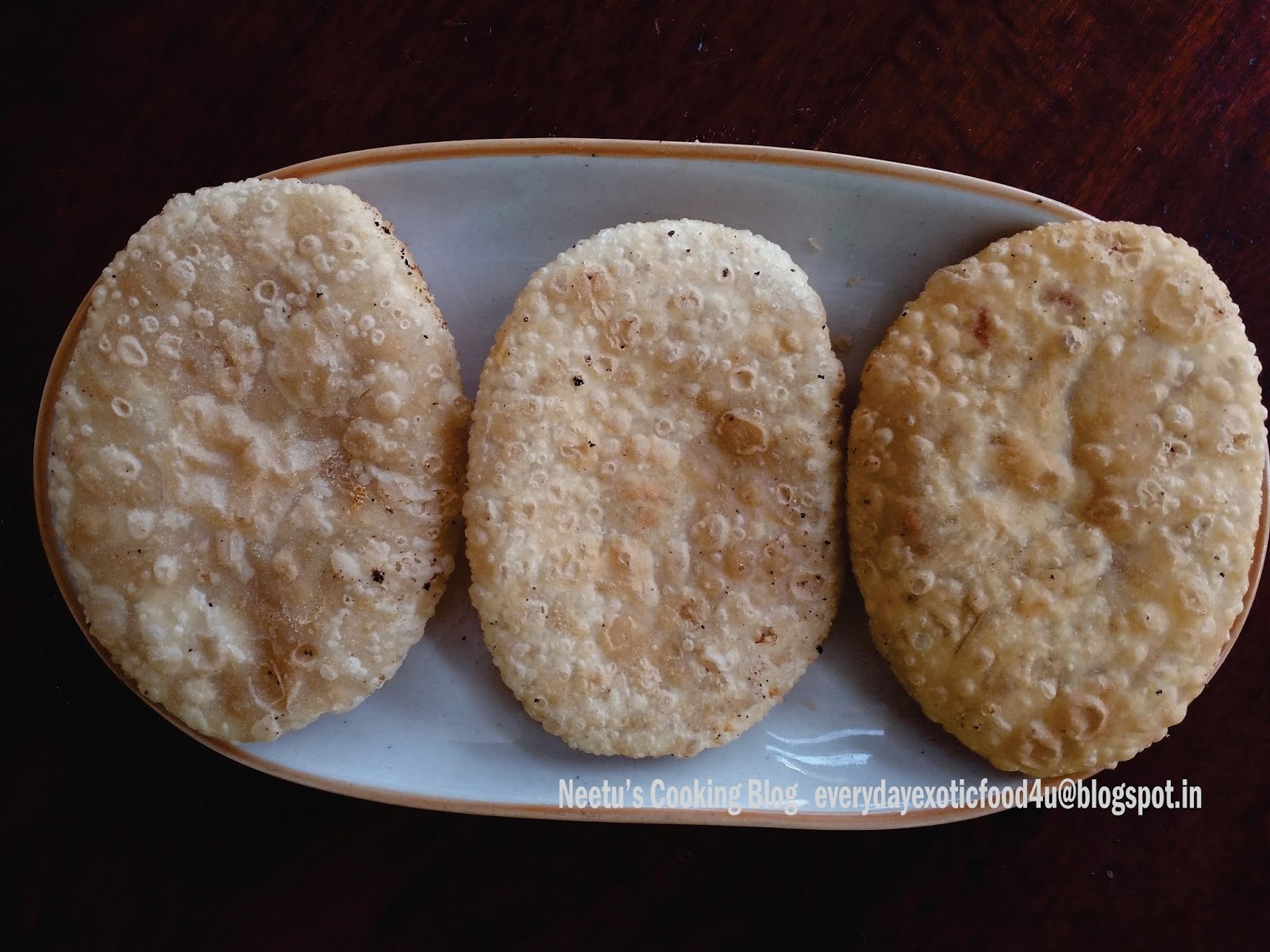
Deep fry till golden in colour and crisp.

Top it with a spoonful of ghee and serve it.


HALDI PANEER


At times you want to do a particular thing but for a hundred reasons or for unknown reasons you don’t do it. Well haldi ki sabzi is that dish which I wanted to try for a long time but couldn’t bring myself to prepare it.

During my three years stay in Jodhpur I had a wonderful time exploring Rajasthani culture, festivals and food. Due to my close interaction with some local friends I was able to know more about rajasthani food culture. But amazingly I missed on this one dish, haldi ki sabzi, until recently I prepared it. I discovered that haldi ki sabzi is my favourite rajasthani sabzi till date. I liked it so much that I prepared it a couple of times more for my guests.


Preparation of this dish takes a bit of time as the fresh grated haldi needs to be sauted on low heat for 30 to 45 minutes depending on the quantity. Believe me , every bit of this labour is worth it. In Rajasthan this sabzi is prepared in bulk for one time, stored in refrigerator and used as required.

Quantity of ghee (clarified butter) required for this dish is equal to the quantity of haldi (turmeric).

Reducing the amount of ghee may cause turmeric to stick to bottom. I realised that enough quantity of ghee makes the process a little easy. Nothing to worry about that extra ghee. It gets separated at the end of preparation and it can be removed easily with help of a ladle. The turmeric flavoured ghee can be used for tempering a dal or smear it on chapatti, roti or phulka.

Generally in Rajasthan Haldi ki sabzi is prepared with green peas. The yellow and green sabzi looks beautiful. Here is a little twist to the traditional Haldi ki sabzi.  Paneer (cottage cheese) compliments haldi very well.


Recipe for Haldi Paneer


Ingredients for Haldi Paneer


  • 250gms fresh haldi or turmeric (grated)
  • 250gms ghee (clarified butter)
  • 150gms paneer (cut into cubes)
  • ½ cup onion (finely chopped)
  • ½ cup curd (beaten)
  • 8 to 10 cloves garlic (crushed)
  • 2 tsp red chilli powder
  • 1 tsp coriander powder
  • 1 tsp cumin powder
  • Salt to taste

How to make


Add ghee in a medium hot pan. Add the crushed galic. Sauté for a minute.


Tip in the grated haldi. Reduce heat to low.


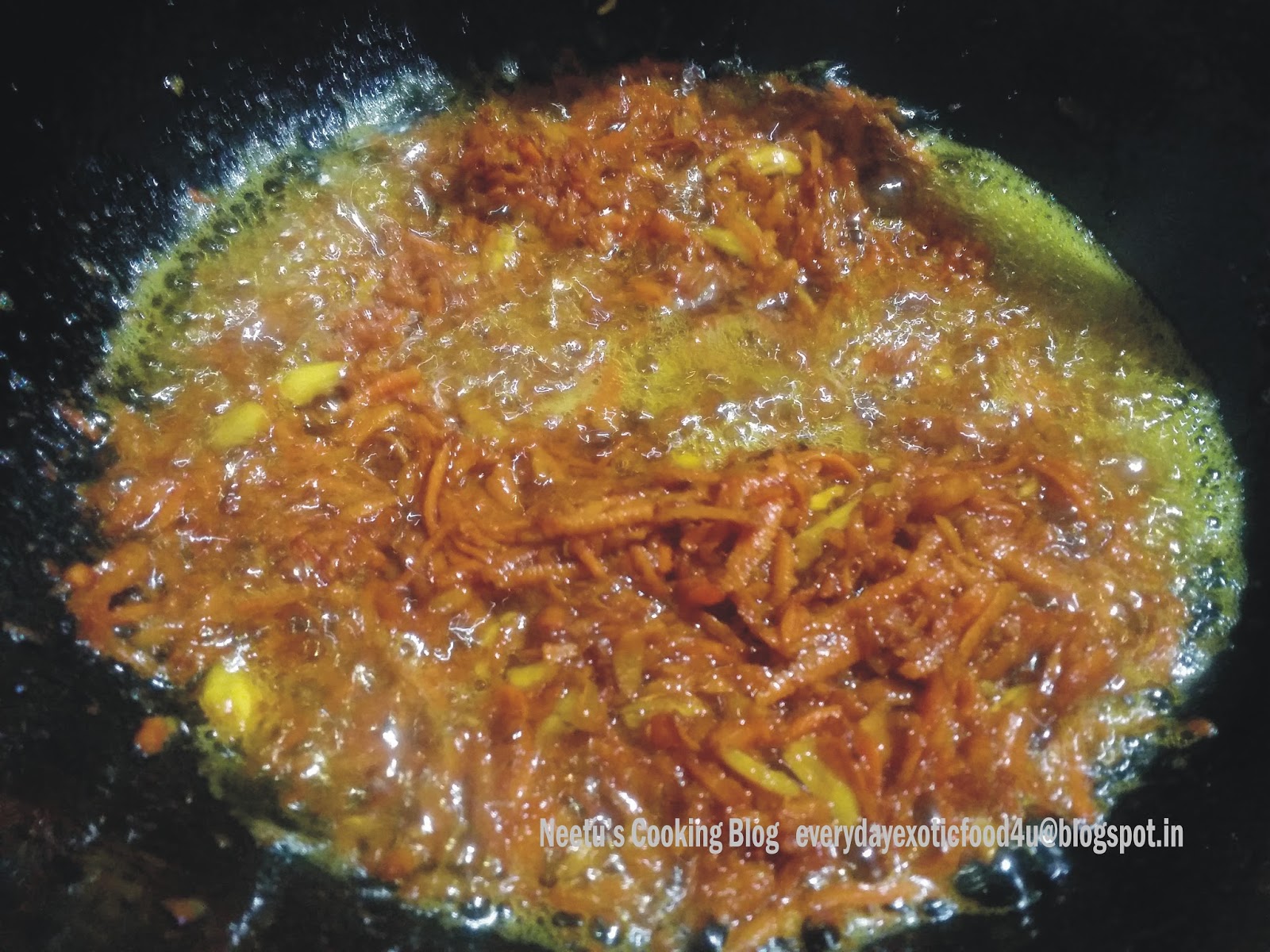
Sauté on low heat until turmeric changes colour from yellow to light brown and the ghee separates from sides. Remember to sauté continuously as it tends to stick to the bottom.


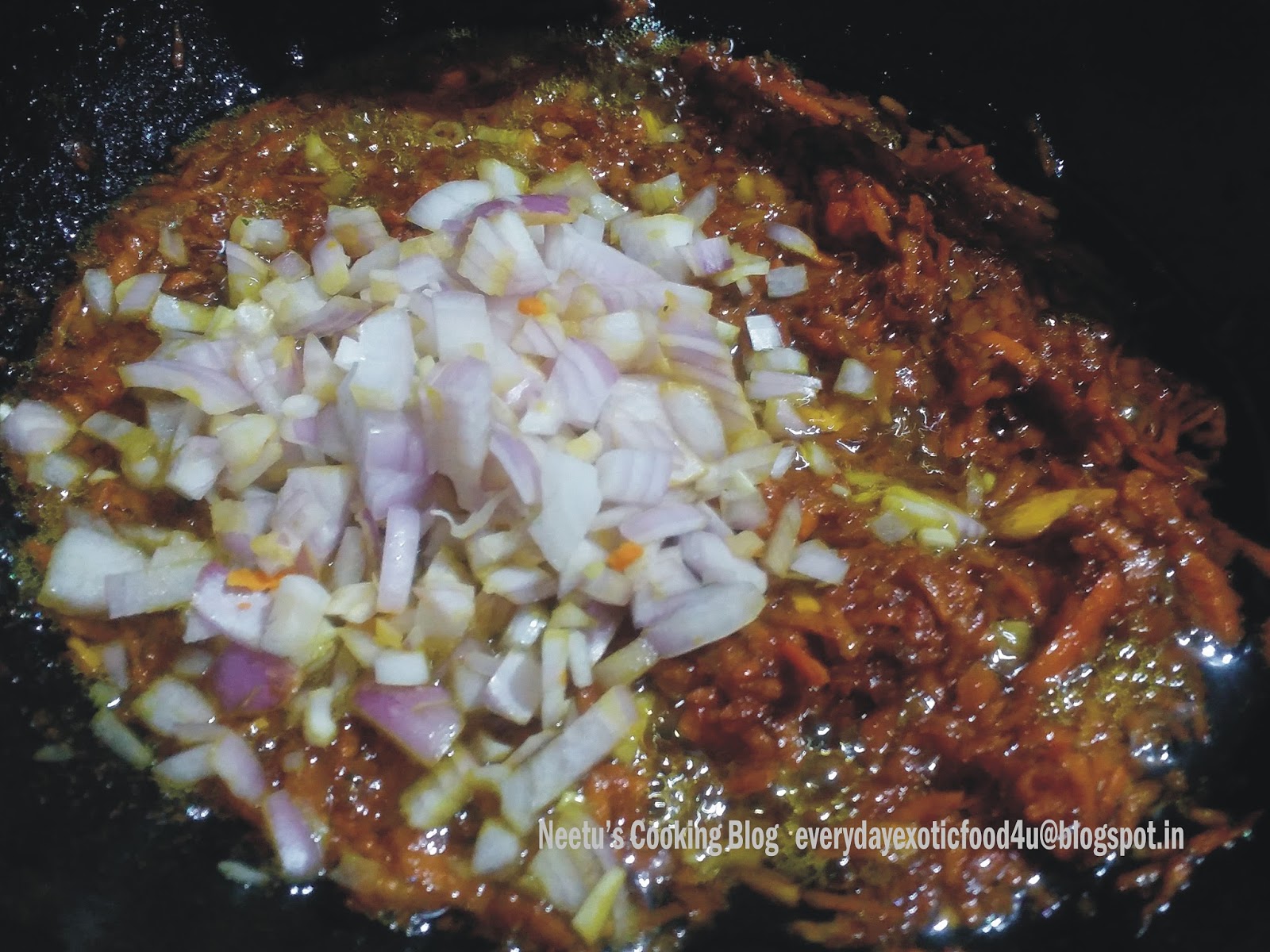
Add onions. Saute for 2 minutes.


Add red chilli powder, coriander powder, cumin powder and salt. Mix well.


Now add beaten curd and mix well.


Sauté continuously for 5 minutes until the ghee starts floating at the surface.


Tip in the paneer cubes and cook for another 5 minutes.

Delicious Haldi paneer is ready to eat. This sabzi can be prepared in bulk and stored in refrigerator for entire winter (minus the paneer). Heat the required quantity from refrigerator and add paneer or peas or any other vegetable of your choice. 

MAVIN MOL PICKLE


I spotted this root like vegetable in a small town market of Karwar where its appearance attracted me. I got to know from locals that it is generally used in pickles.

Mavin mol is a tasteless root vegetable, crunchy in texture, just like the lotus root. Mavin mol looks very similar to Burdock root which is used in Japanese cuisine.

This is the dish for someone who wants to try something unusual. This is an extremely simple recipe which will definitely amaze your guests.


Recipe for Mavin mol Pickle


Ingredients for Mavin Mol Pickle


  • 250 gms mavin mol
  • 4 green chillies (chopped)
  • 1 tbsp mustard seeds (powdered)
  • 3 tsp salt
  • ½ tsp turmeric powder
  • ¼ cup lemon juice
  • For Tempering
  • 1 tsp mustard seeds
  • ¼ tsp asafoetida
  • ¼ cup mustard oil


How to make


Wash and pat dry the mavin mol. Scrape its skin with help of a spoon or a knife (do not use a peeler).

Cut it in even pieces of 1 centimeter.


In a mixing bowl add all the ingredients and mix well.

Heat the mustard oil till smoking point. Remove from heat. Add mustard seeds and asafoetida to it.

Once the tempering is completely cooled add it to the mavin mol mixture. Mix to combine well.

Transfer to an air tight jar. The pickle will be ready to use after two days.


Suggestion


Dry the roots completely before dicing them. Any amount of moisture on them may spoil the pickle.


CHAKLI/ MAHARASHTRIAN SNACK


Chakli is one of the favourite snacks from Gujrat and Maharashtra. There are many different recipes to make chakli. It is made with rice flour or whole wheat flour or semolina. Also ready mixes are available in the market. Nothing can beat a homemade chakli. My recipe calls for rice and roasted chana dal also called as chutney dal readily available in grocery stores.
This is my mother’s recipe, tried and tested.  For years I have been enjoying this lovely snack. Chakli is one item which my mom prepares in more quantity. I don’t restrict the chakli as just a tea time snack. I have it with dal chawal and also with kadhi chawal. Do try it, highly recommended !

Recipe for Chakli


Ingredients for (bhajani) flour mixture


  • 1 kg rice
  • 700 gms roasted chana or chutney dal

How to make (bhajani) flour mixture


Wash the raw rice and dry it in shade.

Dry roast the rice till it becomes light pink in colour.

Let it cool. Add the roasted chana as it is. Mix well.

Give it in flour mill to be made into fine flour.


Ingredients for Chakli


  • 2 cups bhajani or flour mixture
  • 1 ½ tsp chilly powder
  • 2 tsp sesame seeds
  • 1 ½ tsp salt or as per taste
  • 3 tbsp hot oil
  • 1 + 2 tbsp lukewarm water
  • Oil for frying
  • Chakli making machine, thick paper or plastic sheets


How to make Chakli


Take the bhajani or flour mixture in a mixing bowl.

Add hot oil, Rub the flour between the palms.

Add chilli powder, sesame seeds, salt. Mix well.

Add 1 cup of lukewarm water and knead the dough. The dough should not be too stiff or soft. Add additional 2 tbsp of water if required. Let it rest for 5 minutes.

Keep some thick paper sheets or plastic sheets ready for forming in chaklis.

Divide the dough in two equal portions. Knead again.  Shape it in form of a fat sausage, put in in the chakli making machine.

Rotate the spindle so that the chaklis come out. Simultaneously move the machine in a spiral way to form the required shape of chakli.

Heat oil for frying. Make sure that the heat is between medium to low. Fry three to four chaklis in a batch. Flip them after a minute.

Fry till the chaklis are crisp and golden in colour.

Let them cool completely before storing them in an airtight container.

Suggestion


Temperature of the oil should not be too high as Chaklis may get burnt or may remain uncooked.

RAJASTHANI KHEECHADA/ PEARL MILLET PORRIDGE / BAJRA KA KHEECHADA


Bajra or pearl millet is one of the oldest millet. Nowadays it is gaining back its importance. It is known to contain high fibre which makes it a healthier choice. 

Kheechada is a sweet preparation from the land of Rajasthan.  I came across this dish during our stay at Jodhpur. It is usually served with rajasthani thali. My love for bajra or pearl millet pushed me to get the recipe. None of my family members can say no to a piping hot Kheechada  during winter season.


Traditionally bajra is pounded to a coarse texture, mixer grinder makes the work easy.  It is simple to prepare and can be included in your ‘no fuss’ recipe list.   

Recipe for Kheechada


Ingredients


  • 1 cup pearl millet
  • 4 cups water
  • 1 cup grated jaggery
  • ¼ cup ghee (clarified butter)

How to make


Wash and dry the bajra.

Dry  roast the bajra for 4 to 5 minutes.


Once cooled grind it to get a coarse mixture.

Soak it in 4 cups of water for 30 minutes.

Put it on medium heat. Stir continuously to avoid any lumps.

The mixture will slowly thicken. Cook it for another 7 to 8 minutes stirring occasionally.


This will get you a thick soup like consistency.


Serve it hot. Top it with a big spoon of ghee and jaggery.

KHANTOLE (A traditional sweet dish from Karwar region)


Recipe for Khantole


      My passion for food from various parts of our country drives me to try such kind of dishes.

      This traditional sweet dish belongs to the Karwar region, a small town in North Karnataka. It lies on the western cost of India, just south of Goa. Karwar cuisine is similar to Goa cuisine, but it is still distinct. Coconut, Rice and Fish are integral ingredients of their cuisine.

      I have liking for sweets prepared from jaggery, my mother–in-law has passed me this recipe who is very familiar with this region and its cuisine.

      This traditional dish from Karwar is steamed in turmeric leaves with gives a distinct flavour to the sweet.


The main ingredient to khantole is a cucumber which has orange – coloured skin and is bigger is size. It has a slight tang in its taste.


Ingredients


  •  Cucumber – 3 cups (peeled & grated)    
  • Semolina or Sooji – 1 Cup (dry roasted)
  • Jaggery – 1 cup (crushed or grated)
  • Fresh coconut – 1 cup (grated)
  • Cardamom powder – ½ tsp
  • Soda  bicarb – A pinch
  • Clarified butter or ghee – 1 tbsp
  • Dry fruits for garnishing


How to make


Squeeze out the water from the cucumber and put it in a mixing bowl.

Add jaggery and mix well with hands till the jaggery gets combined with the   cucumber nicely.

Now add the semolina, coconut, soda bicarb, ghee and cardamom powder and mix well.


The mixture gets thick and not runny.


In a steamer place the turmeric leaves and put the mixture on it. Spread it evenly with your palms. Sprinkle some chopped nuts.


Keep another layer of the turmeric leaves to cover it nicely.

Steam for 15 to 20 mins. Let it cool for 15 minutes. Cut them in rectangles and serve warm.


Tips


  • Cucumber should not be squeezed out dry. We require same moisture in the cucumber.
  • In case of unavailability of the recommended type of cucumber, any other type of cucumber can be used.